Wandering
The Archive
A new form of interacting with historical image material — inspired by Walter Benjamin's ideas of Erkenntnisblitz and Flânerie, merged with the possibilities of high-dimensional embedding spaces.
The Quiet Repository
We often imagine the archive as a neutral space — a quiet repository where history simply waits to be discovered.
But traditional archives are built on something far more rigid: fixed categories, predetermined boxes, institutional hierarchies that decide in advance how the world can be known.
This is how wandering gets blocked. When every document must fit into a single classification, walls go up between related materials. The unexpected connection — the spark of discovery — becomes nearly impossible.
You must already know what you're searching for. But what about the things you didn't know existed?
Filed Under: Marine Corps Records
Joe Rosenthal's photograph of the flag raising on Iwo Jima — perhaps the most recognizable image of World War II.
Yet this photograph was originally filed according to pure military logic. Not by its cultural power, not by what it meant to the world, but by the institutional hierarchy of the armed forces.
Marine Corps records. Branch of service. Date. Geographic theater of operations.
To find it, you had to think like the military itself — to navigate bureaucratic structures, to know which division, which campaign, which precise moment in the Pacific Theater.
The image's fame meant nothing to the filing system. You had to know the code.
A Different Approach
In the 20th century, Romana Javitz at the New York Public Library tried something different.
She organized the Picture Collection not by hierarchy, but by human concepts. Keywords like “Labor,” “Hope,” “Solitude.”
An attempt to make the archive speak the language of ordinary people.
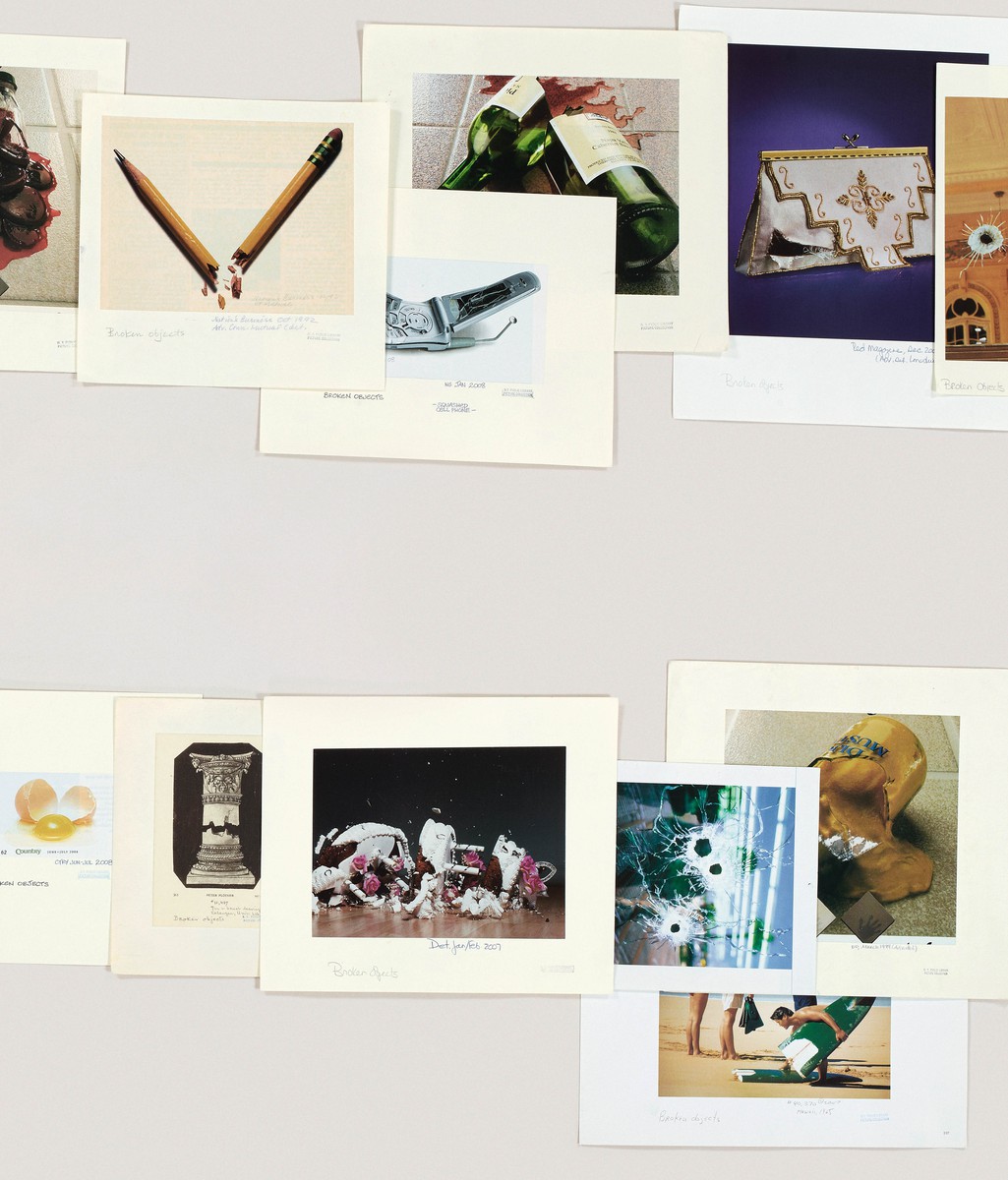
Taryn Simon, Folder: Broken Objects (detail), from the series The Picture Collection, 2012, framed archival inkjet print, 47 × 62 inches (119.4 × 157.5 cm) © Taryn Simon
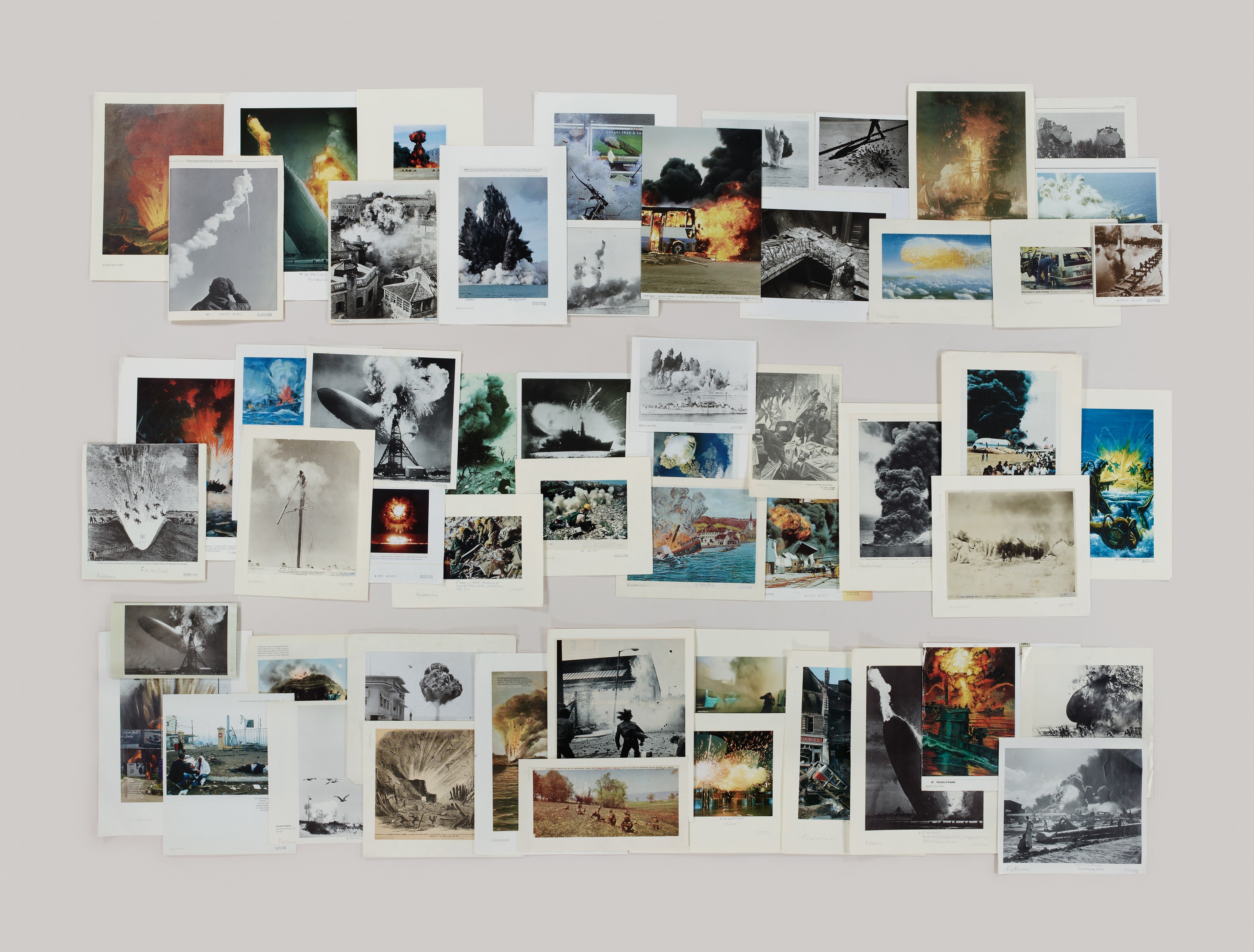
Taryn Simon, Folder: Explosions (detail), from the series The Picture Collection, 2012, framed archival inkjet print, 47 × 62 inches (119.4 × 157.5 cm) © Taryn Simon
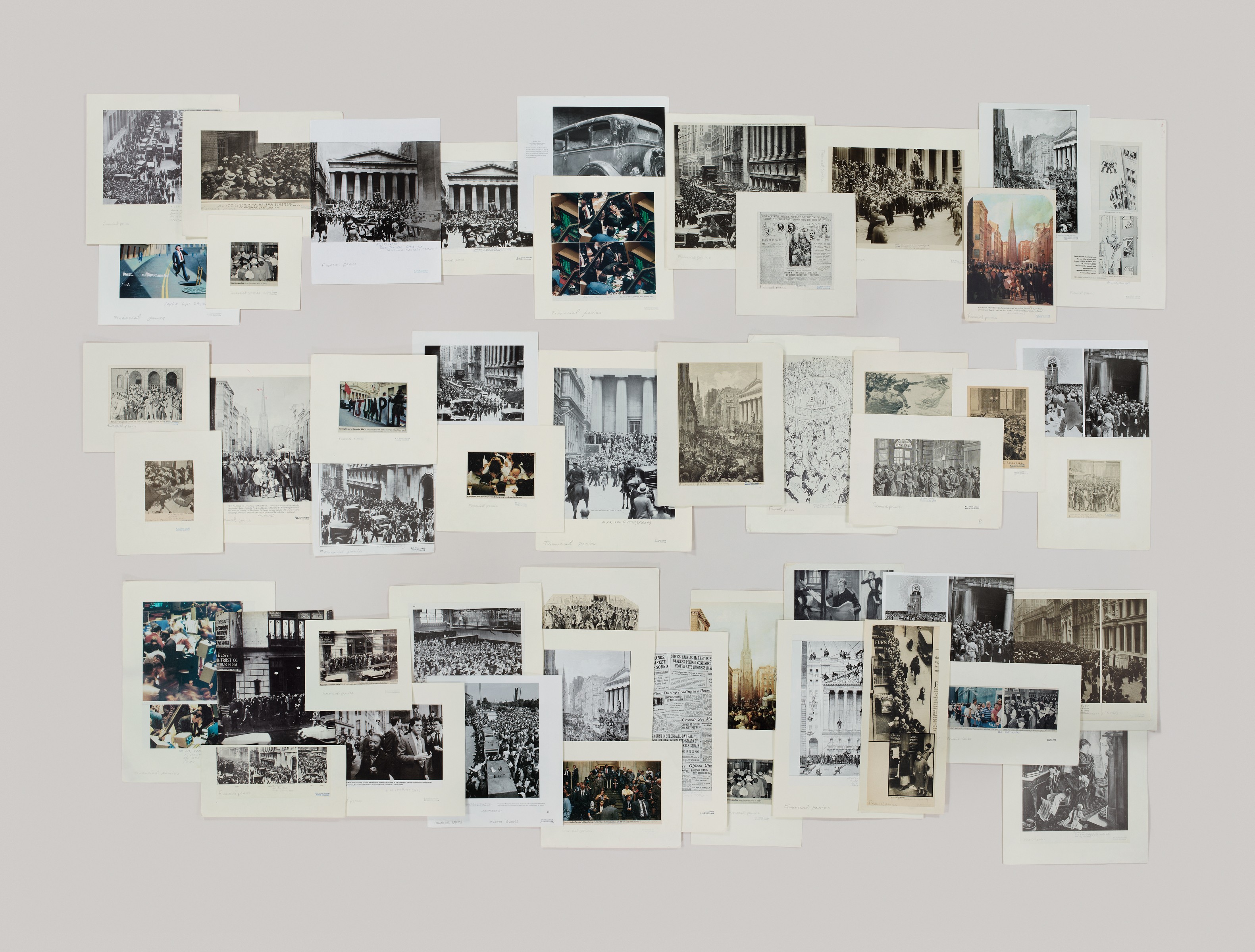
Taryn Simon, Folder: Financial Panics (detail), from the series The Picture Collection, 2012, framed archival inkjet print, 47 × 62 inches (119.4 × 157.5 cm) © Taryn Simon
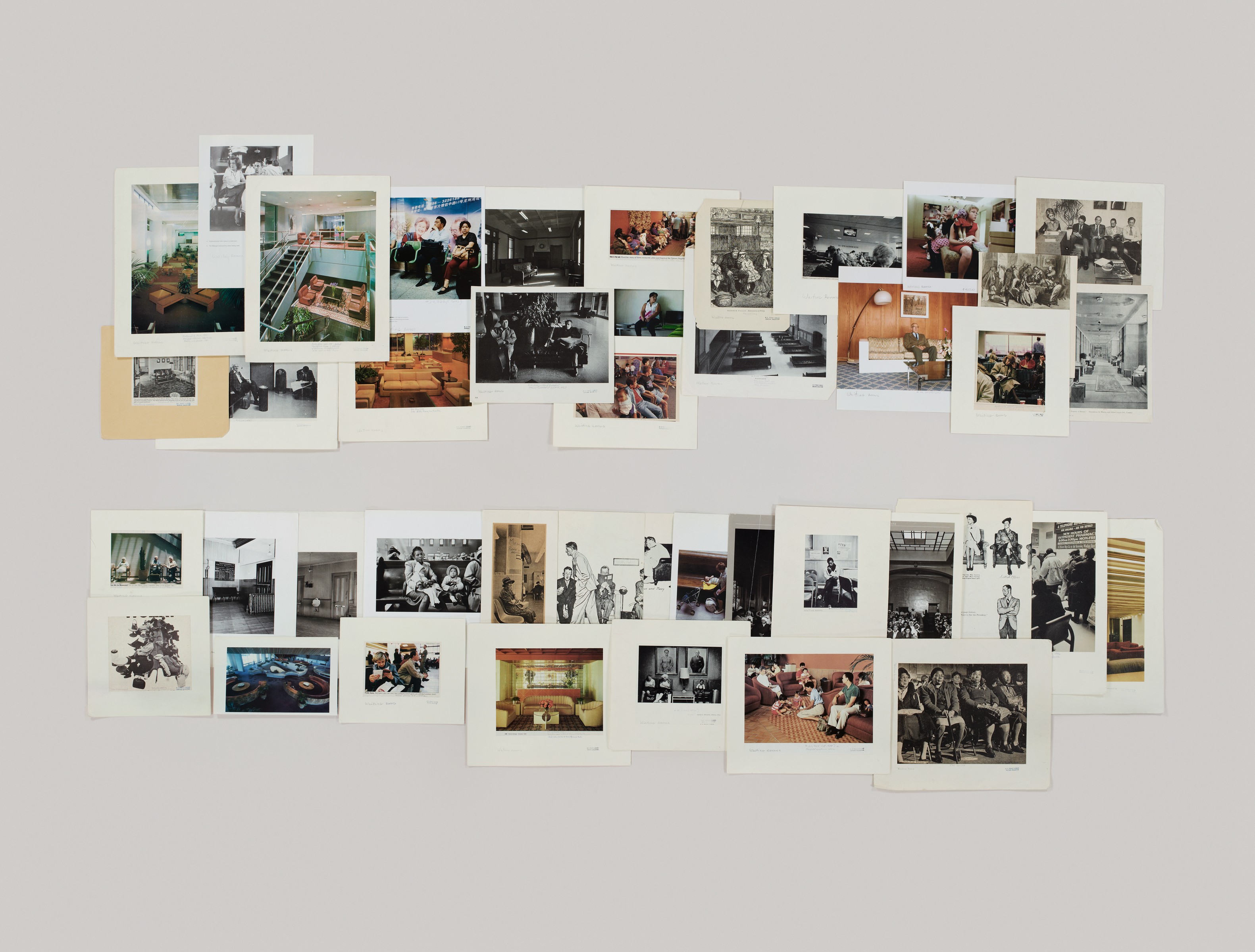
Taryn Simon, Folder: Waiting Rooms (detail), from the series The Picture Collection, 2012, framed archival inkjet print, 47 × 62 inches (119.4 × 157.5 cm) © Taryn Simon
The Archive Produces Power
But even this democratic vision reveals a deeper problem.
As Michel Foucault warned us, the archive doesn't just store knowledge — it produces power.
The archivist choosing the keyword becomes a gatekeeper of truth. The same photograph could be filed as “Protest” or “Riot.” The same moment in history becomes “Uprising” or “Disturbance.”
Each choice opens one door while locking others. Every act of classification excludes — performs one version of reality while silencing alternatives.

“Animals are divided into: (a) belonging to the Emperor, (b) embalmed, (c) trained, (d) pigs, (e) sirens, (f) fabulous, (g) stray dogs, (h) included in this classification, (i) trembling like crazy, (j) innumerable, (k) drawn with a very fine camelhair brush, (l) et cetera, (m) just broke the vase, (n) from a distance look like flies.”
A Topology of Meaning
Where traditional archives force everything into rigid boxes, embeddings offer a different structure: a continuous space where images and words exist in relation to each other — not by definition, but by learned association.
This space is not neutral. It's a representation of human cultural knowledge, shaped by the billions of image-text pairs it learned from.
Press space to explore
The Archive
Exploring 1 historical images
Explore the Embedding Space
Each quadrant controls 64 dimensions. Distance from center = how many. Vertical position = modification strength.
This is just one way to explore. The full archive offers many more tools.
Enter the ArchiveNavigating High-Dimensional Space
Each image in the archive exists as a point in a 256-dimensional embedding space — a mathematical representation of its visual and semantic content.
Through Principal Component Analysis (PCA), we compress these 256 dimensions into a navigable 2D space, preserving the relationships between images while making them visually explorable.
Similar images cluster together, forming neighborhoods of visual meaning. As you wander through this space, you encounter unexpected connections — the Erkenntnisblitz that Benjamin described.